Peter Lynch and Safra Catz are major names in American finance and business, but they became influential in very different arenas. Lynch built his reputation as the celebrated manager of Fidelity’s Magellan Fund and later as an author who made stock-picking principles accessible to individual investors. Catz spent much of her career at Oracle, rising from senior executive positions to CEO and, in 2025, executive vice chair of the company’s board. Their biographies do not show a direct professional or family relationship. The clearest connection between them is educational: both attended the Wharton School of the University of Pennsylvania.
Peter Lynch and Safra Catz Quick Facts
| Detail | Peter Lynch | Safra Catz |
|---|---|---|
| Best known for | Managing Fidelity Magellan Fund | Senior leadership and former CEO of Oracle |
| Main field | Investment management | Enterprise technology and corporate management |
| Major organization | Fidelity Investments | Oracle |
| University connection | Wharton MBA alumnus | Wharton undergraduate alumna; Penn Law alumna |
| Landmark leadership period | Magellan manager, 1977–1990 | Oracle CEO, 2014–2025 |
| Current/continuing role | Vice chairman of Fidelity Management & Research Company; Lynch Foundation leadership | Executive vice chair of Oracle’s board |
Sources from Boston College, Fidelity, Wharton and Oracle document these career histories and educational backgrounds.
Who Is Peter Lynch?
Peter Lynch became one of the best-known American money managers through his work at Fidelity Investments. He managed the Fidelity Magellan Fund from 1977 until 1990, a period that established his reputation as an exceptionally successful stock picker. Fidelity’s historical fund information confirms his 1977–1990 tenure and shows that Magellan had roughly $20 million in assets when he took charge.
Wharton, where Lynch earned his MBA, states that Magellan produced an average annual return of about 29.2% during his management and ranked as a leading general equity mutual fund. Lynch retired from managing Magellan in 1990, while remaining associated with Fidelity in senior and advisory capacities.
His influence extends beyond investment performance. Lynch became particularly well known for explaining how ordinary investors could use their knowledge of products, businesses and industries as a starting point for stock research.
That idea is sometimes shortened to “invest in what you know,” but Lynch’s approach was more demanding than simply buying shares in familiar companies. Fidelity’s own investment material emphasizes that familiarity should lead to analysis rather than replace it. Investors still need to examine a company’s finances, valuation, competitive position and prospects before committing capital.
“Use your specialized knowledge to home in on stocks you can analyze, study them, and decide whether they are worth owning.” — Peter Lynch, as quoted by Fidelity.
Lynch also became a widely read financial author. His books include One Up on Wall Street, Beating the Street and Learn to Earn. Boston College describes the first two as bestsellers and notes that his books have been translated into numerous languages.
Who Is Safra Catz?
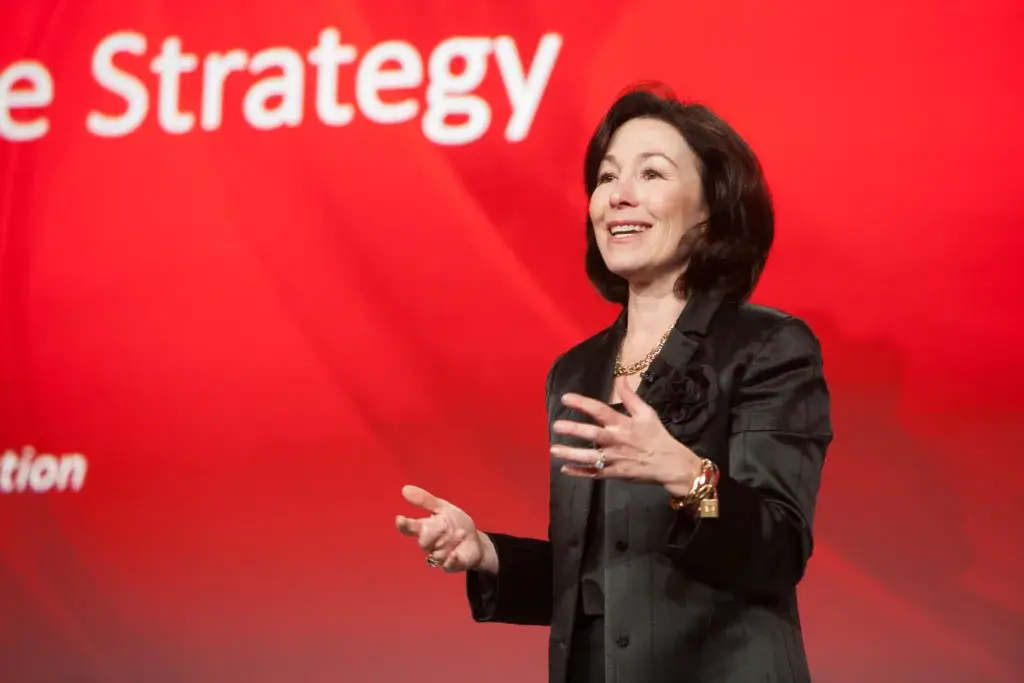
Safra Catz’s career followed a different path. Rather than managing public-market investments for a mutual fund, she became one of the central executives behind Oracle’s development into a global enterprise technology company.
Before Oracle, Catz worked in investment banking at Donaldson, Lufkin & Jenrette. Oracle states that her roles there included managing director in investment banking. She joined Oracle in 1999 and subsequently held several senior positions, including president and chief financial officer.
In September 2014, Oracle’s board appointed Catz and Mark Hurd as CEOs after Larry Ellison moved from the CEO position to executive chairman and chief technology officer. At that time, Oracle said finance, manufacturing and legal operations would report to Catz.
Catz remained a CEO of Oracle until September 2025. Oracle then appointed Clay Magouyrk and Mike Sicilia as CEOs and moved Catz into the position of executive vice chair of its board of directors. Oracle’s current leadership pages continue to list her in that role in 2026.
Her career combines investment-banking experience with corporate finance, operations and strategic management. This makes Catz fundamentally different from Lynch: Lynch became famous for selecting investments from outside companies, while Catz built her reputation by helping manage and allocate resources inside a major technology corporation.
Are Peter Lynch and Safra Catz Connected?
There is no documented direct professional or family relationship between Peter Lynch and Safra Catz in the authoritative biographies reviewed for this article.
Boston College, Fidelity and the Lynch Foundation describe Lynch’s career around Fidelity, investment management and philanthropy. Oracle and Wharton describe Catz’s career through investment banking and Oracle. None identifies the other person as a colleague, relative, business partner or significant professional associate. Based on those records, claims of a deeper relationship should not be presented as fact.
They do, however, share a genuine academic connection.
Their Wharton Connection
Peter Lynch earned an MBA from the Wharton School of the University of Pennsylvania. Wharton identifies him as a member of its MBA Class of 1968.
Safra Catz graduated from Wharton’s undergraduate program in 1983 and from the University of Pennsylvania’s law school in 1986. Wharton identifies her with the alumni designations W’83 and L’86.
They attended at different times, so their shared Wharton background should not be interpreted as evidence that they studied or worked together.
Peter Lynch vs. Safra Catz: Two Different Forms of Business Leadership
The comparison becomes more useful when viewed through the decisions each person became known for.
| Area | Peter Lynch | Safra Catz |
| Core responsibility | Selecting and managing investments | Managing corporate finance, operations and strategy |
| Career environment | Asset management | Enterprise technology |
| Primary institution | Fidelity | Oracle |
| Decision focus | Which companies are attractive investments? | How should a technology company operate and grow? |
| Public legacy | Stock-picking philosophy and investment education | Corporate leadership and Oracle’s strategic development |
| Shared background | Wharton alumnus | Wharton alumna |
Lynch’s work required evaluating businesses from an investor’s perspective. He looked for companies whose earnings, competitive advantages, financial condition and valuation could support long-term investment returns.
Catz operated from inside a company. Her responsibilities at Oracle covered areas including finance and legal operations, and she eventually shared and then held the company’s top executive position. Oracle’s leadership announcements show the breadth of responsibility entrusted to her during her tenure.
The difference is important. Great investors and great corporate executives both make capital-allocation decisions, but they operate under different constraints. An investor can decide whether to own a company. An executive must decide how the company itself deploys money, people and technology.
What Their Careers Have in Common
Despite their different professions, several meaningful similarities stand out.
Both built careers in fields where financial analysis matters. Lynch used analysis to identify investments, while Catz entered Oracle after a career in investment banking and later held the company’s CFO position among other senior roles.
Both also became closely associated with long-term institutions rather than brief executive assignments. Lynch’s name remains strongly connected with Fidelity decades after his Magellan tenure, while Catz joined Oracle in 1999 and spent more than two decades rising through its executive ranks before becoming executive vice chair.
Finally, their shared Wharton background connects two very different examples of financial and managerial leadership: one centered on analyzing companies as investments and the other on running one of the world’s major technology businesses.
FAQs About Peter Lynch and Safra Catz
Are Peter Lynch and Safra Catz related?
Authoritative biographies from Fidelity, Boston College, Oracle and Wharton do not identify a family relationship between them. Their documented careers developed independently.
Did Peter Lynch and Safra Catz work together?
There is no established record in the reviewed corporate and biographical sources showing that they worked together. Lynch’s career is principally associated with Fidelity, while Catz’s is primarily associated with Oracle and, earlier, Donaldson, Lufkin & Jenrette.
What is Peter Lynch famous for?
Peter Lynch is best known for managing Fidelity’s Magellan Fund from 1977 to 1990 and for his influential writing about stock selection and long-term investing.
What is Safra Catz known for?
Safra Catz is known for her long executive career at Oracle. She became co-CEO in 2014, later served as CEO, and was appointed executive vice chair of Oracle’s board in September 2025.
What do Peter Lynch and Safra Catz have in common?
The strongest documented connection is the University of Pennsylvania’s Wharton School. Lynch earned a Wharton MBA, while Catz earned her undergraduate degree from Wharton before graduating from Penn Law.
Does Safra Catz still run Oracle?
Not as CEO. Oracle announced on September 22, 2025, that Catz would become executive vice chair of the board while Clay Magouyrk and Mike Sicilia became CEOs. Oracle’s current executive directory lists Catz as executive vice chair.
Conclusion
Peter Lynch and Safra Catz represent two distinct sides of American business leadership. Lynch became an investment legend through Fidelity Magellan and a practical approach to analyzing stocks. Catz rose through finance and corporate management to lead Oracle before becoming executive vice chair of its board. Their careers do not establish a direct partnership or family relationship, but they do share a notable Wharton connection. Understanding that distinction provides a clearer picture than treating their names as evidence of a relationship that authoritative records do not support.
Read also Barbara Sherwood Latibeaudiere: The Television Director Behind the Name